Scottish Food | Beef

Scotch Beef and Scotch Lamb hold the coveted PGI Promise (Protected Geographical Indication). It’s a European scheme that identifies high-quality products which are unique to a particular region – such as Arbroath Smokies.
Consumers, for example, can mistakenly presume that Aberdeen Angus Beef must be Scottish, but it is produced from herds all over the world. That is why the recent announcement by the Scottish Executive that catering establishments throughout Scotland will have to tell customers which country their beef comes from has been welcomed by red meat promotion bodies such as Quality Meat Scotland. Recent research revealed that the vast majority of Scottish consumers thought it was important to have a legal requirement to show the origin of beef extended from the retail trade to restaurants and pub menus and this will help to close the gap as well as bring Scotland up to speed with neighbours such as Ireland and France.
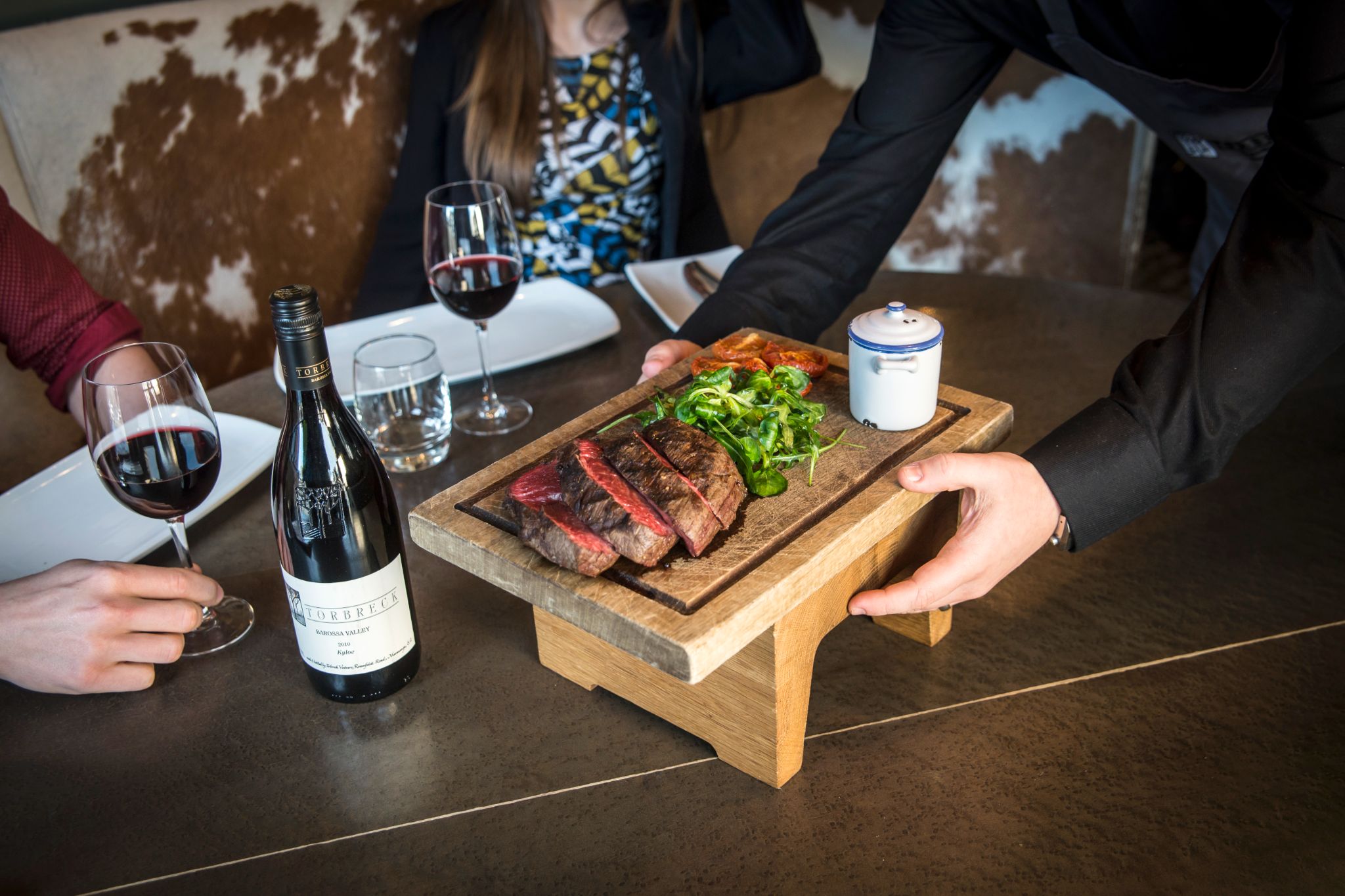
Quality Meat Scotland already runs a scheme to highlight restaurants that promote Scotch Beef on their menus. Members of the Scotch Beef Club proudly herald to diners that their beef is produced locally to the highest standards with a guarantee for the welfare of cattle.
Aberdeen-Angus is arguably the best known breed of cattle from Scotland, renowned for the rich and tasty flavour of the meat which makes first-class steaks. The story of the meteoric rise of the Aberdeen-Angus breed has seen no parallel in the history of cattle.
It evolved during the early part of the 19th century from the hardy, black, polled (hornless) beasts, known locally as ‘doddies’ and ‘hummlies’, which populated North-east Scotland,. Within the short space of 50 years, it spread to all the major beef producing countries in the world and today is the dominant breed in countries such as the USA and Argentina.
According to the Aberdeen Angus Cattle Society, first formed in 1897, this dominance has been achieved by the breed’s easy management, economy of production and superior eating quality. Today Aberdeen-Angus is as popular as ever, with prices soaring to record levels at the February 2007 Perth cattle sales.
Another of Scotland’s oldest, instantly recognisable and best known breeds is the Highland, an iconic national emblem with its thick, shaggy coat of red hair, long fringe and majestic sweeping horns. It is thought that the original stock may have been brought to Scotland by the Celts of ancient times. They are one of the few breeds that can survive the rigours of the harsh winter in the mountainous highlands and windswept western isles of Scotland.
New folds, as herds of Highlanders are known, are founded every year at home and abroad and Highland Cattle societies have spread all over Europe. Long-lived, hardy and easily handled, they thrive naturally without the need for intensive farming and their meat is lean and succulent with a distinctive flavour.
The traditional breeds in Scotland have declined since the 1960s with the introduction of foreign livestock. Even once common breeds like Belted Galloway have now been classified as ‘minority’ along with Highland, Luing and Beef Shorthorn. The scarce Shetland, with only 200 breeding females on the Islands, has officially been designated as ‘rare’ by the Rare Breed Survival Trust.
The recent Foot and Mouth outbreak highlighted the vulnerability of some of these breeds as when numbers are few and concentrated within a limited geographical area, the risk of extinction is a very real one. Happily, now that the beef ban has been lifted, Scotch Beef has found its rightful place back on the menus of top restaurants in Europe and the reputation of this high-class product remains undiminished.